

How Commercial Projects Can Improve Hot Tub Availability with Flexible Heating
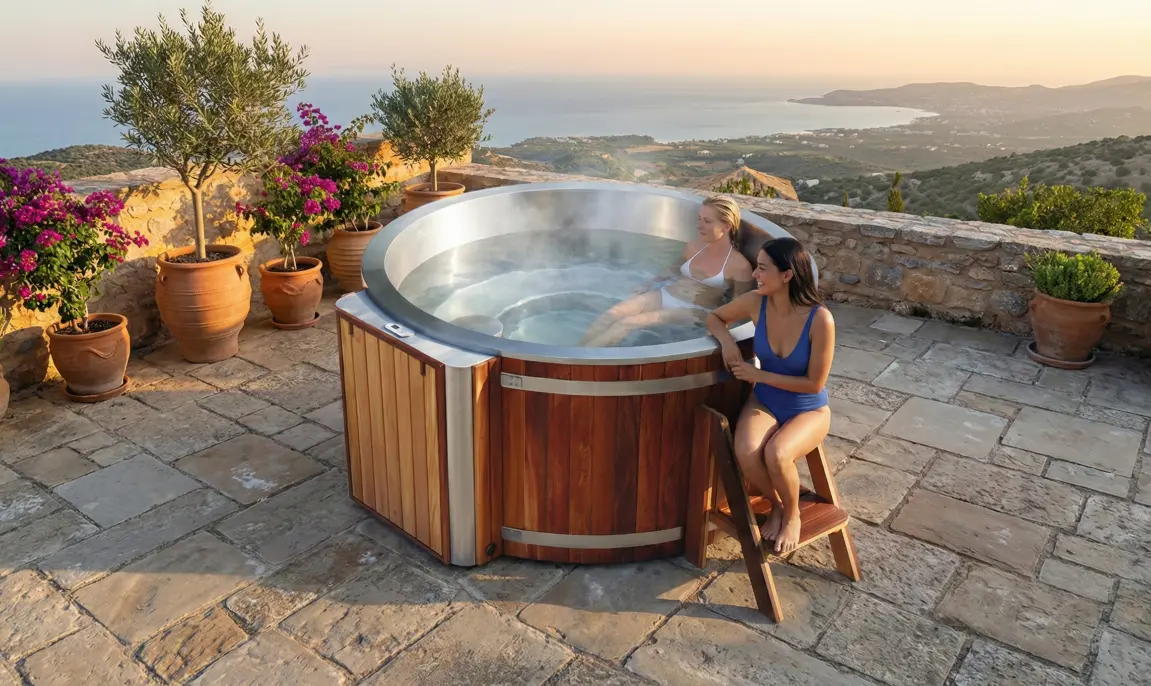
For hotels, resorts, glamping sites, and other hospitality businesses, an outdoor hot tub is more than a leisure facility. It can become part of the guest experience and, in some projects, an important feature used to attract bookings and increase the value of an outdoor space.
But there is an operational question that is often overlooked:
How available is the hot tub when guests actually want to use it?
A hot tub that takes too long to prepare, depends entirely on one energy source, or requires unnecessary downtime can create challenges for businesses operating wellness facilities on a daily basis.
This is where flexible heating design can make a practical difference.
Hot Tub Availability Matters More Than It Seems
For a private homeowner, waiting longer for a hot tub to heat may simply mean changing the time of a personal soak.
For a hotel or resort, the situation is different.
Guests may want to use the facility in the evening, after outdoor activities, or at relatively short notice. If the water is not ready, the facility cannot deliver the experience that was expected.
For commercial operators, therefore, heating performance should not only be considered in terms of temperature. It should also be considered in terms of equipment availability.
The more efficiently a hot tub can move from preparation to actual use, the easier it becomes for operators to organize daily usage.
Different Operating Periods Require Different Heating Strategies
Commercial wellness facilities do not necessarily operate under the same conditions throughout the day.
A hot tub may need rapid heating before guest arrival, stable temperature maintenance during operating hours, or a lower-energy approach during periods of limited use.
Using only one heating method can make it more difficult to adapt to these changing requirements.
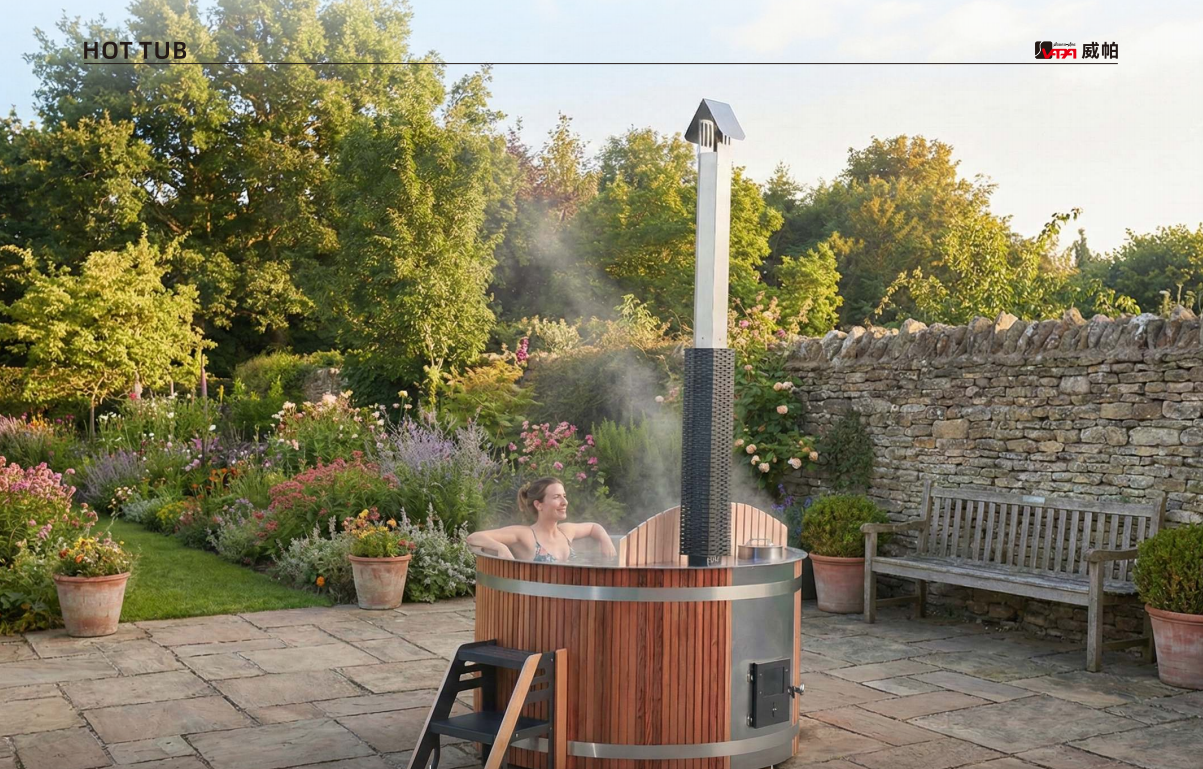
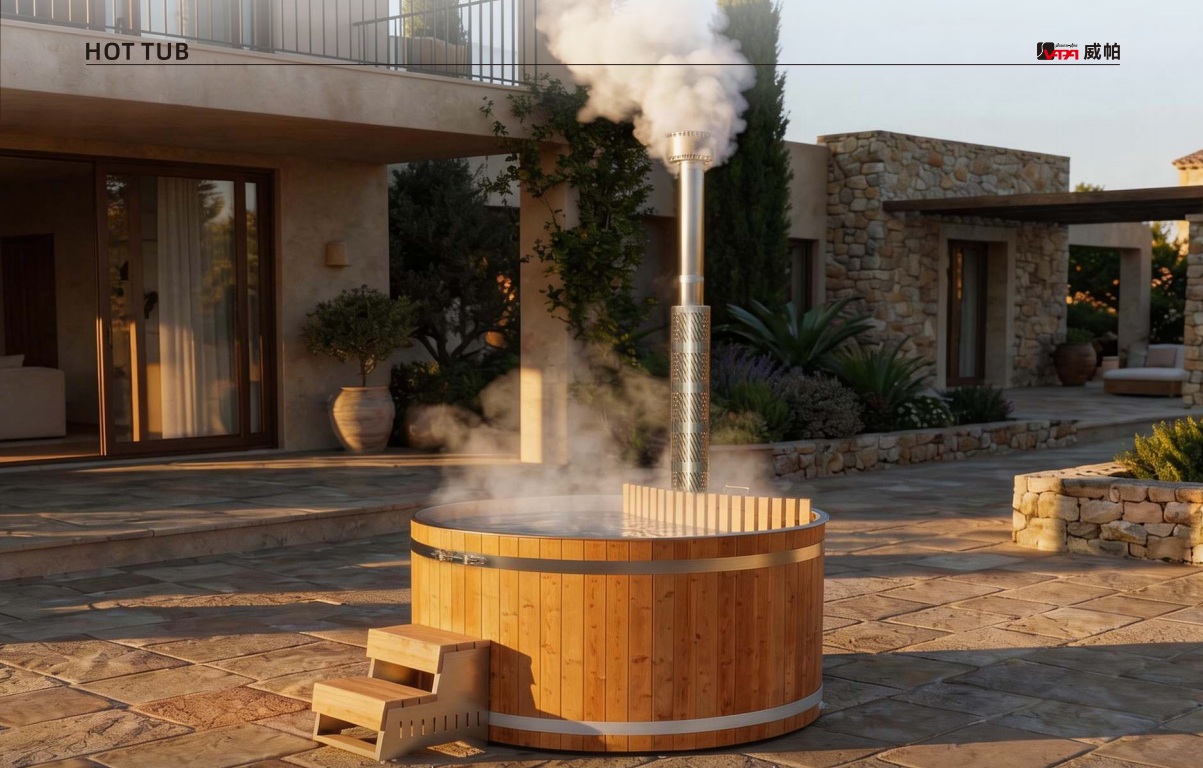
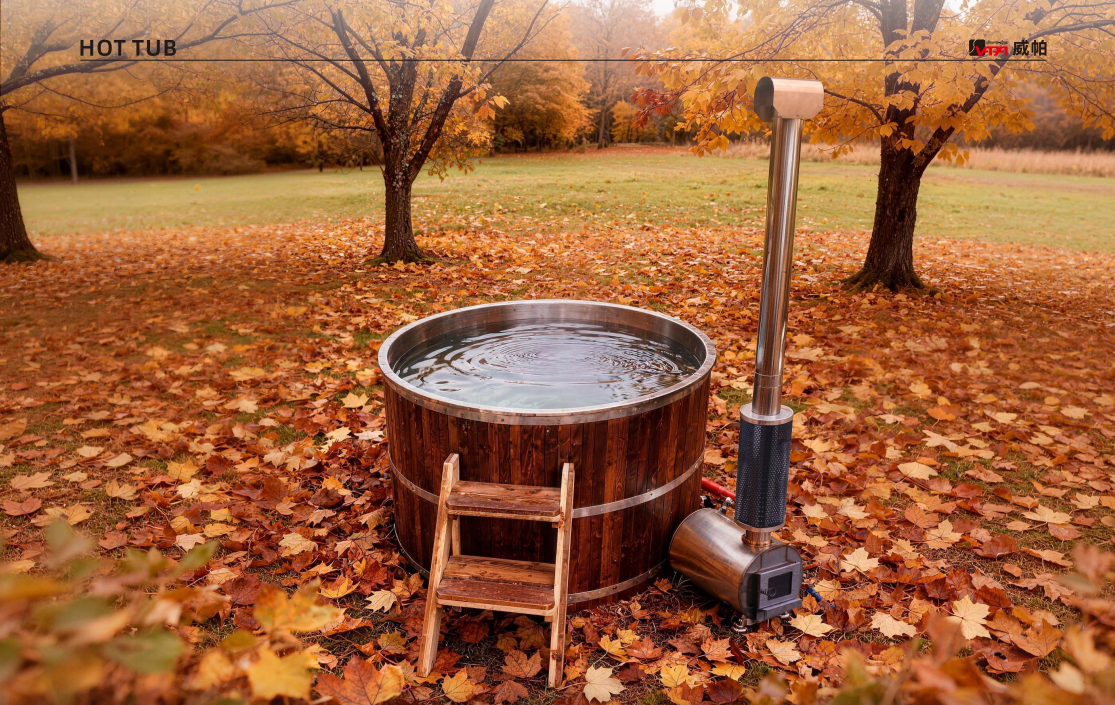
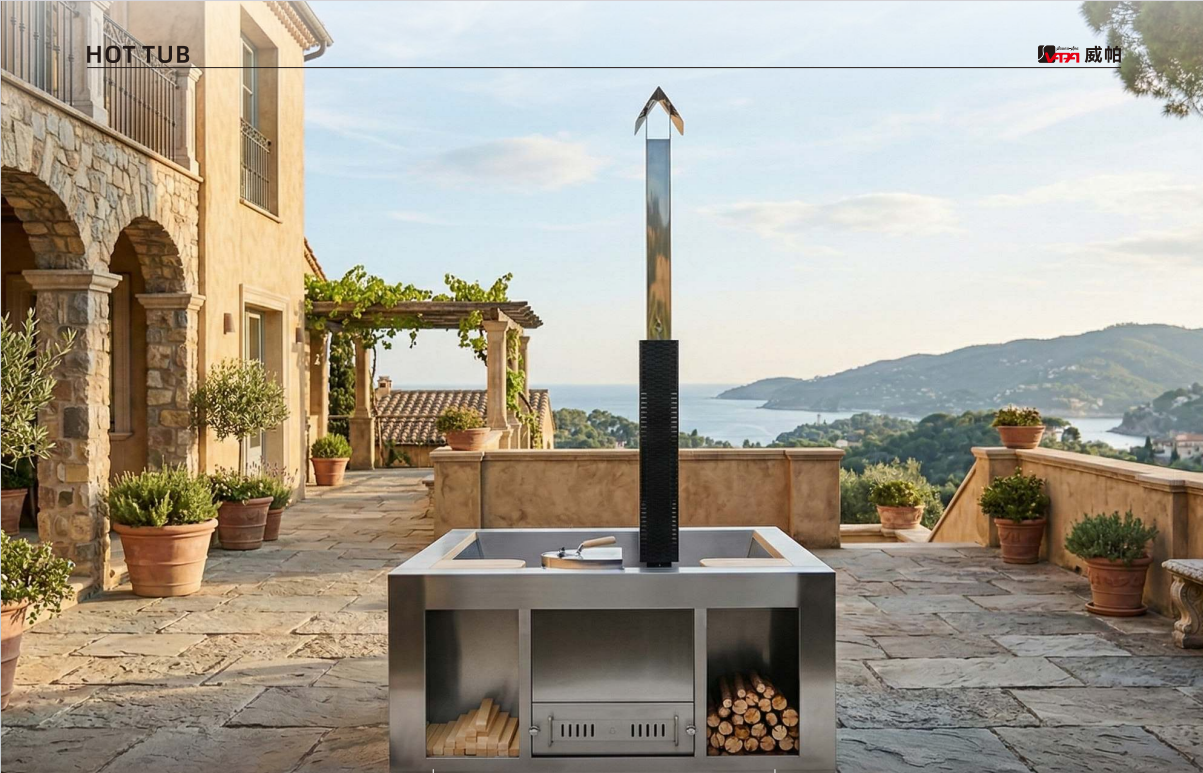
A hybrid heating system provides another approach by combining wood-fired and electric heating. Instead of treating one energy source as the only option, operators can select a heating method according to the current operating situation.
For example, when a faster temperature increase is required, both heating systems can be used together under suitable conditions. Once the desired temperature is reached, electric heating can help maintain the selected temperature.
This creates greater flexibility in how the equipment is operated.
Reducing Waiting Time Can Improve Daily Scheduling
Heating time is not simply a technical specification for a commercial project. It can influence how a facility is scheduled.
Imagine a resort where several guests use the outdoor spa area at different times throughout the day. If the equipment requires a long preparation period every time the temperature needs to be adjusted, staff have fewer options when responding to changing guest demand.
A more flexible heating system can help operators plan around actual usage rather than relying on a fixed heating schedule.
Under suitable conditions, Vapasauna's hybrid system can reach a comfortable soaking temperature in approximately 40 minutes when the wood-fired and electric systems operate together. Actual heating time will vary depending on factors such as water volume, starting temperature, and outdoor conditions.
The important point for commercial operators is not simply the number of minutes. It is the ability to respond more flexibly when the facility needs to be ready for use.
Energy Flexibility Can Be Valuable for Outdoor Projects
Outdoor wellness projects can operate in very different environments.
Some may have reliable electrical infrastructure, while others may place greater importance on alternative heating options. Seasonal temperatures and operating patterns can also influence energy requirements.
A hybrid system allows the operator to use different heating approaches rather than depending entirely on electricity.
Wood-fired heating can be used when additional heating capacity is required, while electric heating can provide controlled temperature maintenance. In suitable situations, the wood-fired system can also be used independently.
This flexibility can be particularly useful for glamping projects, outdoor accommodation, resorts, and locations where energy availability or operating conditions may vary.
Rather than focusing only on the initial equipment cost, project owners can consider how different heating options may affect day-to-day operation.
Equipment Design Should Support the Staff Operating It
Another consideration for commercial projects is how easily the equipment can be managed by staff.
A hot tub may have excellent specifications, but complicated operation can increase the workload for the people responsible for maintaining the facility.
This is why heating should be considered together with temperature control, circulation, filtration, and routine maintenance.
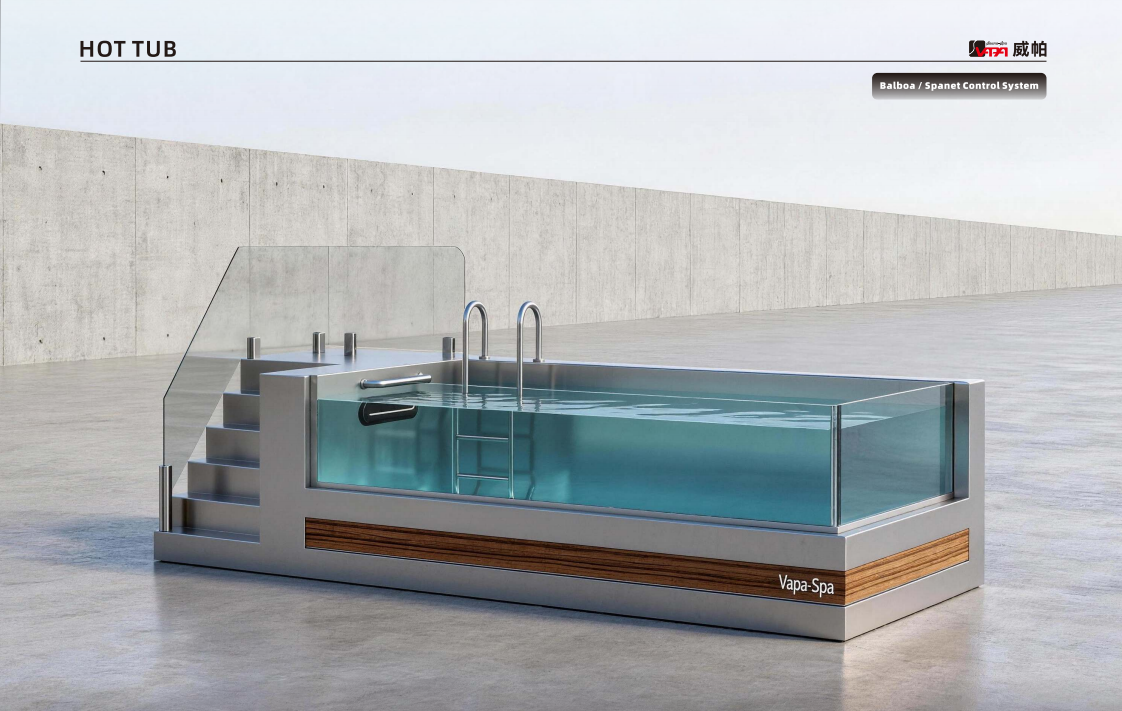
Vapasauna's hybrid hot tub combines its heating system with a Spanet control system and water management functions. These systems are designed to support more consistent operation and make the equipment easier to manage as part of a wider outdoor wellness facility.
For commercial operators, the goal is not simply to install a technically advanced hot tub. The goal is to have a system that can become part of a practical daily operating routine.
A Flexible Solution for Different Commercial Settings
The operational requirements of a boutique hotel may differ from those of a glamping site or resort.
A hotel may prioritize quick preparation and consistent temperature control. A remote accommodation project may place greater importance on heating flexibility. A resort may need equipment that can accommodate changing guest demand throughout the day.
A hybrid hot tub can provide a common solution while allowing the heating strategy to be adjusted according to the project.
This makes the technology relevant to a range of outdoor wellness applications, including:
- Boutique hotels and resorts
- Glamping and outdoor accommodation
- Holiday parks
- Commercial wellness facilities
- Premium residential developments
- Outdoor leisure projects
For each project, the ideal configuration should be determined by factors such as expected usage, climate, available energy sources, installation conditions, and the operator's preferred workflow.
Choosing a Hot Tub Based on Operation, Not Just Features
When selecting equipment for a commercial wellness project, it is easy to focus on visible features such as massage jets, lighting, waterfalls, or exterior finishes.
These features certainly contribute to the guest experience.
However, the operational side of the equipment deserves equal attention.
How quickly can it become ready for use?
How can its temperature be maintained?
What happens when energy requirements change?
Can the heating method adapt to different operating periods?
How much work will staff need to manage the system?
These questions can have a greater impact on long-term usability than a simple feature list.
For commercial buyers, a hot tub should therefore be evaluated as part of the entire operating system rather than as an isolated product.
A More Flexible Approach to Commercial Outdoor Wellness
The future of commercial outdoor wellness is not necessarily about adding more features to every product. It is also about making equipment easier to operate, more adaptable to different conditions, and better aligned with real-world business needs.
A hybrid heating system provides one practical way to achieve this flexibility by allowing wood-fired and electric heating to work according to the situation.
For hotels, resorts, glamping projects, and other hospitality businesses, this can help turn a hot tub from a static facility into a more adaptable part of the guest experience.
Vapasauna continues to develop outdoor wellness solutions for international markets, with flexible configurations designed to meet different project requirements.
For commercial buyers, the most important question may not be “Which hot tub has the most features?”
It may be:
“Which hot tub can work most effectively within our daily operation?”