







Planning a Wood-Fired Hot Tub Installation: Space, Ventilation and Access
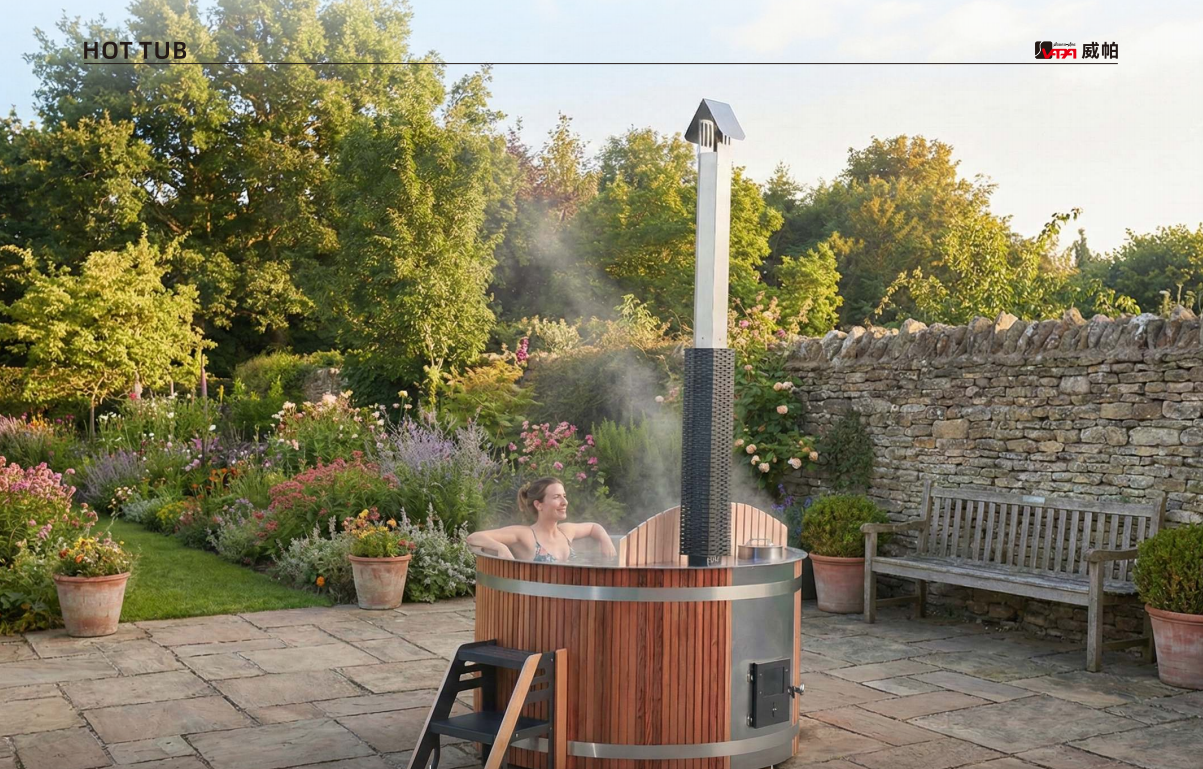
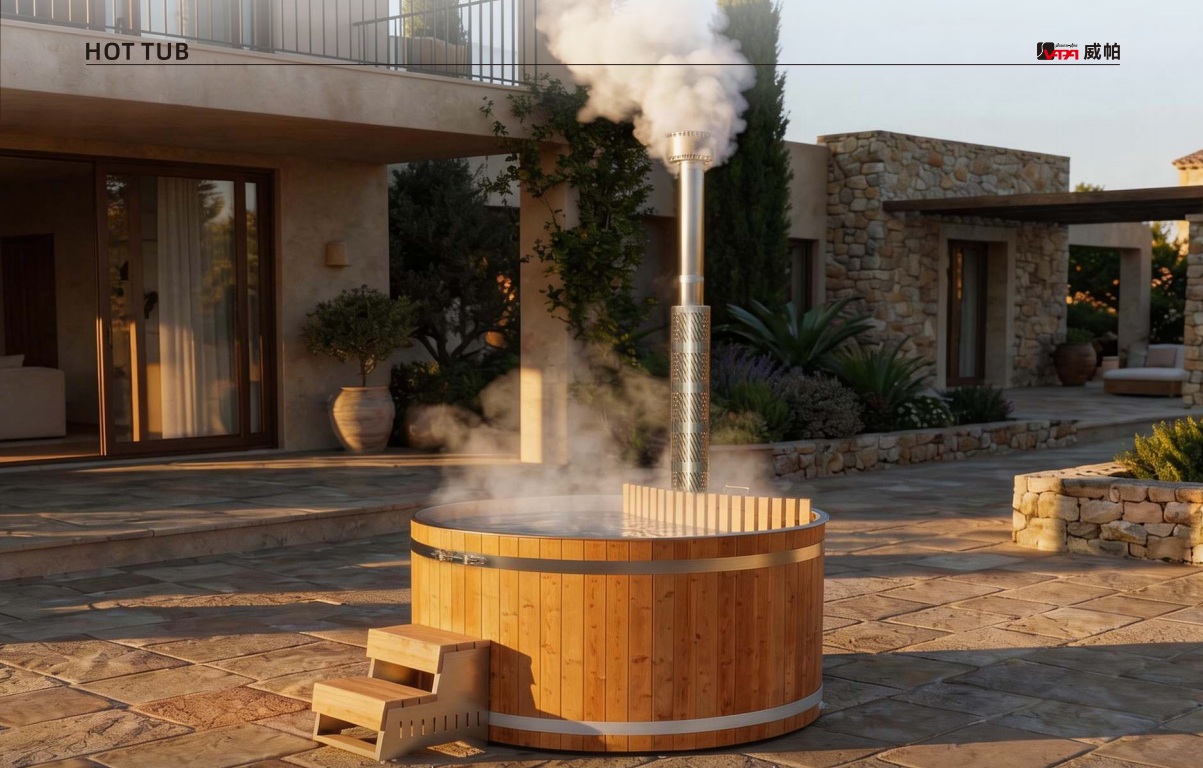
Installing a wood-fired hot tub involves more than choosing a model and filling it with water. The surrounding space, chimney arrangement, access route, and location of the wood-burning stove all influence how practical the installation will be.
Whether you are planning an outdoor hot tub for a private garden, a holiday rental, a hotel, or a wellness facility, preparing the installation area in advance can help reduce unexpected work and make future operation and maintenance easier.
This guide covers three important considerations before installing a wood-fired hot tub: space, ventilation, and access.
1. Choose a Suitable Location
The first step is to identify a location that can accommodate the hot tub and its associated heating components.
Measure the available area before selecting a model. Remember to consider not only the tub's external dimensions but also the space needed around it for entry, cleaning, servicing, and handling firewood.
When assessing a potential location, consider:
-
Ground stability: The base must be level and capable of supporting the combined weight of the hot tub, water, and occupants. Confirm the required load capacity with the supplier or a qualified installer.
-
Drainage: Plan how water from draining, cleaning, or splashing will be managed so it does not create standing water or damage nearby structures.
-
Weather exposure: Consider prevailing winds, rain, snow, and direct sunlight. A suitable cover and an appropriately protected location may help reduce exposure and simplify routine care.
-
Privacy and circulation: Allow enough room for people to move safely around the tub without obstructing doors, pathways, or other outdoor facilities.
-
Nearby structures: Check the proposed location against local requirements for separation from buildings, boundaries, combustible materials, and overhead structures.
For commercial projects, also consider how the hot tub fits into the wider outdoor layout. Guest circulation, cleaning routines, and access for maintenance staff should be planned alongside the guest experience.
2. Plan Chimney Placement and Ventilation
Ventilation and smoke management are essential considerations for a wood-fired hot tub. The chimney needs a suitable route, and smoke must be able to disperse without creating an avoidable nuisance or safety concern.
Before installation, check the following points.
Keep the Chimney Route Clear
Review the chimney's position in relation to roofs, eaves, pergolas, trees, windows, doors, and neighboring properties. Nearby obstacles can affect smoke dispersal and may create additional fire-safety concerns.
Do not assume that an open garden automatically provides sufficient clearance. Follow the product manufacturer's installation instructions and applicable local building and fire regulations for chimney height, clearances, and terminal placement.
Consider Wind Direction
Wind can influence where smoke travels. If possible, assess the usual wind direction and consider how smoke may affect seating areas, neighboring buildings, open windows, and walkways.
A location that appears suitable on a calm day may be less comfortable when the wind changes. Plan for typical operating conditions rather than relying on a single observation.
Allow for Safe Combustion and Maintenance
Use only the stove and chimney configuration specified for the hot tub. Keep combustible materials away from hot surfaces and maintain the clearances required by the manufacturer and local regulations.
The stove, chimney, and connecting components should be installed and inspected according to the supplied instructions. Do not modify the chimney or improvise a ventilation arrangement without appropriate professional guidance.
Important: A wood-fired hot tub should be installed outdoors in a location suitable for safe combustion and smoke dispersal. Do not operate a wood-burning stove in an enclosed or inadequately ventilated space. Local rules may impose additional restrictions.
3. Leave Enough Room for Firewood and Daily Operation
A practical installation should make routine operation straightforward. The user needs to load firewood, manage the fire safely, check the equipment, and clean the surrounding area.
When planning the layout, allow for:
-
Firewood storage: Choose a dry, accessible storage location that keeps fuel protected from excessive moisture while maintaining the required distance from the stove and other heat sources.
-
Stove access: Ensure the firebox and any designated loading area can be reached without awkward movement or obstruction.
-
Ash handling: Identify a safe place to manage and dispose of ashes in accordance with the stove instructions and local fire-safety guidance.
-
Cleaning space: Leave enough room to clean the exterior, access drain points where applicable, and carry out routine checks.
-
Cover handling: If the hot tub uses a cover, allow sufficient room to remove, store, and replace it without blocking the main access route.
For hospitality businesses, these details can have a direct effect on daily workflows. A layout that is convenient for guests but difficult for staff to clean or service may create avoidable operating challenges.
4. Check the Delivery and Installation Route
A suitable final location is only part of the installation plan. The hot tub must also be delivered to that location.
Measure the entire route from the delivery vehicle's unloading point to the installation area. Check gates, doorways, narrow passages, steps, slopes, corners, and changes in ground level.
Before ordering, confirm the packaged and assembled dimensions, product weight, and handling requirements with the supplier. If the route includes stairs, restricted access, or a long carry, ask whether specialist lifting equipment or additional personnel will be needed.
Also consider whether the chimney, stove, or other components are delivered separately. Modular delivery may affect the space and equipment required for installation.
Planning the route in advance can help prevent delays on delivery day and reduce the risk of damage to the product or surrounding property.
5. Prepare the Base and Utility Connections
The installation base should be prepared according to the hot tub's construction, filled weight, and manufacturer's recommendations. A level, stable surface helps the unit sit correctly and supports safe use.
Depending on the model, additional preparations may include:
-
A suitable non-combustible area around the stove, where required
-
Drainage provisions for water changes and cleaning
-
Access to a water supply for filling
-
Protection for nearby surfaces from heat, sparks, or water
-
Electrical connections, but only if the selected model includes electrical components
Not every wood-fired hot tub has the same requirements. An electrically assisted or hybrid model may need additional electrical planning, while a wood-fired-only model may have a different installation setup.
Confirm the exact requirements for the selected model before construction begins. Electrical work, structural preparation, and fire-safety measures should be handled by qualified professionals where required.
6. Plan for Future Inspection and Maintenance
Installation planning should account for the life of the product, not just the day it is delivered.
The stove, chimney, drain connections, and other serviceable components should remain accessible for inspection and maintenance. Avoid placing the hot tub so close to a wall, fixed deck, or enclosure that routine work becomes difficult.
For commercial sites, consider who will be responsible for checking the stove and chimney, cleaning the hot tub, managing firewood, and preparing the unit between guest visits. A clear maintenance routine can help staff operate the facility more consistently.
Before finalizing the layout, review the proposed installation with the supplier or installer. Confirm that there is enough clearance for the required inspections and that any removable components can be accessed without dismantling surrounding structures.
7. Use a Pre-Installation Checklist
Before the hot tub arrives, review the following checklist.
-
The selected model fits the available space.
-
The base is level and designed for the expected load.
-
Drainage and water-filling arrangements have been considered.
-
The chimney route, clearances, and smoke dispersal meet manufacturer instructions and local requirements.
-
Firewood storage is accessible and positioned safely.
-
The stove can be loaded and maintained without obstruction.
-
The delivery route has been measured and checked.
-
Any required electrical or structural work has been arranged.
-
Routine inspection, cleaning, and servicing access has been preserved.
-
Local building, fire-safety, and other applicable requirements have been checked.
Completing these checks before delivery can make installation more predictable and help identify potential issues while the layout can still be adjusted.
Final Thoughts
A successful wood-fired hot tub installation begins with careful planning. The available space needs to accommodate the tub, the chimney must be positioned for safe smoke dispersal, and the layout should provide practical access for delivery, firewood handling, cleaning, and maintenance.
These considerations are relevant to both private outdoor installations and commercial wellness projects. Hotels, holiday parks, spas, and other hospitality operators may also need to account for staff workflows, guest circulation, and regular servicing.
Vapasauna offers wood-fired hot tub options for different outdoor settings. Before choosing a model, buyers should review its dimensions, stove configuration, chimney requirements, and installation guidance with the supplier to confirm that the proposed location is suitable.
By addressing space, ventilation, and access early in the planning process, buyers can make more informed installation decisions and prepare an outdoor hot tub area that is practical for long-term use.