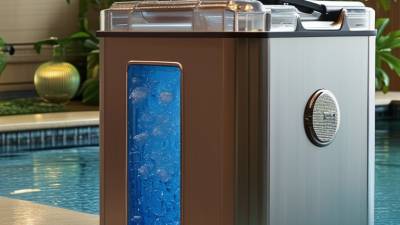
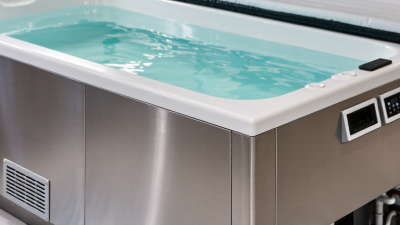
China's Cold Plunge market isn't just tiny wellness studios anymore—it's moved into hotels, gyms, clinics, and even people's homes. That's great, more options. But comparing product quality? Not always so easy. A slick website can make a company look way more experienced than it really is. And yeah, that matters.
This Cold Plunge Tub With Chiller: Complete Guide rounds up ten China-based manufacturers for buyers who want practical, reliable gear. The review digs into tub construction, cooling performance, insulation, filtration, sanitation, warranty terms, and after-sales support. It also looks at production capacity, customization experience, certifications, and how well they communicate on exports. Honestly, those details usually tell you more than flashy marketing copy.
A dependable Cold Plunge Tub Chiller should keep water temps steady during repeated use. It also needs to handle heat, moisture, drainage, and electrical safety without cutting corners. Stainless steel, acrylic, fiberglass, and insulated composites all have pros and cons. No material is perfect.
Real-world inspection still matters. Ask for factory videos, test reports, sample units, and clear specs. Check cooling capacity under realistic room temps—not just lab conditions. And before you place a big order, get the replacement-part policy in writing.
The companies in this guide may fit different buyer types. Some lean toward premium commercial systems. Others are more flexible with OEM and private-label work. A few might offer better value for smaller projects, though their service networks deserve a closer look.
This selection isn't a final verdict. Supplier info can change. Buyers should verify certifications, production claims, lead times, and warranty coverage themselves. Careful comparison helps you avoid costly surprises and make safer purchasing decisions. Truthfully? Even a supplier that looks strong may need more questions. That's just part of responsible sourcing.
Cold Plunge Tubs Explained: 3–15°C Water, Chillers, and Core Components
Cold plunge tubs usually operate between 3°C and 15°C, depending on user preference and equipment capacity. Lower temperatures demand stronger insulation and more careful control. A chiller removes heat through a refrigeration circuit, while a circulation pump moves water through the system. Filters capture debris, and digital sensors monitor temperature changes.
Manufacturers in China may offer different tub materials, chiller sizes, and control systems. Check the inner surface, insulation thickness, drain design, and electrical protection before comparing prices. A reliable supplier should provide clear specifications, testing records, maintenance instructions, and replacement-part information. A polished product photo proves very little. I would still question vague cooling times and missing water-flow details.
**Tips:** Ask whether the chiller maintains 3–15°C under real ambient conditions. Confirm the required voltage before ordering. Inspect the filter location and cleaning access. Keep the water visibly clean, but do not assume filtration replaces proper maintenance. Temperature readings can vary slightly between the sensor and the tub surface. That small difference matters. Also, do not choose the coldest setting automatically; comfort, supervision, and gradual use deserve more attention than a dramatic number.
Cold Plunge Tubs Explained: Cooling Energy Required at 3–15°C
This chart shows the theoretical heat removal needed to cool a 300-liter water volume from 20°C to different target temperatures. It uses water’s specific heat capacity of approximately 4.186 kJ/kg·°C and excludes heat gains, insulation losses, plumbing, and chiller inefficiency.
Lower target temperatures require greater heat removal. In a complete Cold Plunge System, the chiller, circulation pump, heat exchanger, filter, insulated tub, and water-quality components all affect actual cooling time and energy consumption.
How to Evaluate China’s Top 10 Manufacturers Using 8 Technical Metrics
When comparing China’s top 10 Cold Plunge Tub And Chiller manufacturers, use eight technical metrics, not showroom images. Cooling capacity should be tested at a stated ambient temperature, water volume, and starting temperature. Record pull-down time, temperature stability, coefficient of performance, and standby energy use. The IEA’s The Future of Cooling report notes that cooling already represents almost 20% of building electricity consumption worldwide. Energy performance matters, even for a compact system.
Water engineering needs equal attention. Check circulation flow, filtration accuracy, drain design, tub insulation, and material certificates. Ask for measured noise levels, electrical protection tests, leak testing, and refrigerant details. The UNEP 2023 Cooling Emissions and Policy Synthesis Report links rising cooling demand with stronger efficiency and refrigerant controls. A manufacturer should provide traceable test records, not only “laboratory tested” wording. Request ISO 9001 records, production inspection plans, and sample serial numbers.
Serviceability is the eighth metric. Examine compressor access, controller replacement, spare-part availability, warranty terms, and response procedures. A factory that explains failure rates honestly is often more credible than one promising perfect performance. I would also compare three identical samples, because one successful unit proves little. This evaluation is not flawless; test conditions can still differ between factories. That weakness should be documented, not hidden.
Top 10 Chinese Manufacturers Compared by 0.5–2.0 HP Chillers and MOQ
China’s cold plunge market includes many capable factories, but specifications vary sharply. This review compares ten Chinese manufacturers by chiller capacity and MOQ, not marketing claims. Their listed options commonly span 0.5, 1.0, 1.5, and 2.0 HP. Smaller chillers may suit compact tubs, while larger units can support heavier daily use. However, cooling performance depends on water volume, insulation, ambient temperature, and circulation flow.
MOQ deserves equal attention. Some suppliers accept one complete Cold Plunge Chiller And Tub for testing. Others request five, ten, or more sets before production begins. Buyers should request current datasheets, compressor details, electrical certifications, noise readings, warranty terms, and spare-part pricing. Check whether the quoted MOQ includes customized colors, logos, packaging, and control panels. These details often change the final cost.
From a procurement perspective, 1.0 HP can be a practical middle option, but it is not automatically the best choice. A 2.0 HP model may cool faster, yet it can increase power demand and purchase cost. I would also inspect weld quality, drain placement, filter access, and the actual water-flow test. Factory photos are useful, but incomplete. A short video with a dated test label gives stronger evidence. Some quotations look precise. They still need careful verification.
Benchmark Specs: 1–3 m³/h Flow, 20–50 μm Filtration, and COP Ratings
When comparing China’s top cold plunge tub manufacturers, start with measurable chiller performance, not showroom claims. A practical benchmark is 1–3 m³/h water flow through the circulation loop. This range supports stable mixing in many residential and light-commercial tubs, but tank volume and pipe length still matter. Oversized flow can increase noise and pump energy.
Filtration deserves equal attention. A 20–50 μm filter can capture visible debris and reduce the load on the heat exchanger. However, micron rating alone proves little. Ask whether the rating is nominal or absolute, and request pressure-drop data at the stated flow.
The U.S. Department of Energy identifies heat-exchanger cleanliness and airflow as important efficiency factors in cooling equipment. The same principle applies here.
COP should be tested under declared conditions. AHRI Standard 550/590-2023 provides recognized methods for evaluating water-chilling equipment, although small plunge systems may not follow it exactly. Request inlet water temperature, ambient temperature, setpoint, and power input. A published COP without these details is incomplete. Cold Plunge Chiller Tub Wifi models may offer remote monitoring, yet connectivity does not improve thermodynamics. It only improves visibility.
Field checks often reveal differences between laboratory numbers and real installations. That is worth challenging. A manufacturer should provide test records, electrical protection details, filter replacement intervals, and noise measurements rather than polished screenshots.
Supplier Comparison: Cooling Time, Warranty, Energy Use, and 12–24-Month ROI
For a China top-10 shortlist, compare measured cooling time, not advertising language. Cooling 1,000 litres from 20°C to 10°C removes about 11.6 kWh of heat. A unit delivering 0.8 kW of cooling needs at least 14.5 hours theoretically; insulation, ambient temperature, and circulation extend that period. Ask suppliers for test conditions, water volume, starting temperature, and recovery time. The key term is **Cold Plunge Tub Cooling Chiller**, but “1 HP” alone proves little.
Energy use requires two figures: cooling capacity and electrical input. Calculate the operating cost from kWh per cycle, not compressor size. ASHRAE’s HVAC guidance supports comparing capacity, input power, and part-load behaviour, although its large-chiller methods do not perfectly fit compact tubs. The IEA’s *The Future of Cooling* report warns that cooling demand may triple globally by 2050, making standby consumption and insulation increasingly important. Small details matter: a 300-watt standby load can consume about 2.6 kWh daily.
Warranty comparisons should separate compressor coverage, parts, labour, and water-circuit exclusions. A 24-month warranty may sound stronger, yet a six-month control-board limit changes the risk. For 12–24-month ROI, subtract electricity, filters, servicing, and replacement parts from avoided ice or outsourced cooling costs. Use local tariffs and real invoices. My rough spreadsheet still misses downtime, which is inconvenient but honest. Ask for serialised test records, CE-related documentation where applicable, and an energy measurement method before ranking suppliers.
China Top 10 Cold Plunge Tub With Chiller Manufacturers? - Supplier Comparison: Cooling Time, Warranty, Energy Use, and 12–24-Month ROI
| Rank | Anonymous Supplier Profile | Typical Tub Volume
(L) | Cooling Range
(°C) | Initial Cooling Time
20°C to 8°C | Stable Operating
Energy Use | Compressor
Capacity | Warranty
Coverage | Typical OEM
Lead Time | Estimated Landed
Price (US$) | Estimated 12-Month
ROI | Estimated 24-Month
ROI | Key Buying Consideration |
| 1 | Supplier Profile 01 | 350 | 3–40 | 3.5–4.5 h | 1.8–2.4 kWh/day | 1.0 HP | 24 months | 25–35 days | $1,650–$1,950 | 58% | 151% | Strong balance of cooling speed, insulation, and after-sales coverage. |
| 2 | Supplier Profile 02 | 300 | 4–40 | 4–5 h | 1.7–2.3 kWh/day | 0.8 HP | 18 months | 20–30 days | $1,450–$1,750 | 62% | 170% | Competitive entry cost with moderate energy efficiency. |
| 3 | Supplier Profile 03 | 500 | 3–38 | 5–6.5 h | 2.4–3.2 kWh/day | 1.5 HP | 24 months | 30–45 days | $2,050–$2,450 | 39% | 105% | Larger capacity suited to gyms, spas, and shared-use facilities. |
| 4 | Supplier Profile 04 | 250 | 5–40 | 3–4 h | 1.5–2.0 kWh/day | 0.8 HP | 12 months | 18–28 days | $1,250–$1,500 | 69% | 193% | Fast pull-down performance and low purchase price; shorter warranty. |
| 5 | Supplier Profile 05 | 400 | 4–40 | 4.5–5.5 h | 2.0–2.7 kWh/day | 1.2 HP | 18 months | 25–40 days | $1,700–$2,100 | 46% | 123% | Good mid-size option with a broad OEM customization range. |
| 6 | Supplier Profile 06 | 280 | 3–40 | 3.5–4.5 h | 1.6–2.2 kWh/day | 1.0 HP | 18 months | 22–32 days | $1,400–$1,700 | 60% | 163% | Efficient compact configuration for residential and boutique fitness use. |
| 7 | Supplier Profile 07 | 600 | 4–38 | 6–8 h | 2.8–3.8 kWh/day | 2.0 HP | 24 months | 35–50 days | $2,500–$3,100 | 25% | 73% | High-volume commercial design, but slower payback due to higher capital cost. |
| 8 | Supplier Profile 08 | 320 | 5–40 | 4–5 h | 1.9–2.5 kWh/day | 1.0 HP | 12 months | 20–30 days | $1,350–$1,650 | 56% | 151% | Short lead time and flexible exterior finishes for private-label projects. |
| 9 | Supplier Profile 09 | 450 | 3–38 | 5–6 h | 2.3–3.0 kWh/day | 1.5 HP | 18 months | 28–42 days | $1,950–$2,350 | 38% | 101% | Suitable for frequent use where sanitation and filtration options are priorities. |
| 10 | Supplier Profile 10 | 220 | 5–40 | 3–4 h | 1.3–1.8 kWh/day | 0.6 HP | 12 months | 18–25 days | $1,100–$1,350 | 75% | 217% | Lowest entry cost and energy demand; best suited to single-user installations. |
Calculation basis: Indicative OEM specification ranges for comparison only. Cooling time assumes approximately 25°C ambient temperature, a covered and insulated tub, clean filter, and an initial water temperature of 20°C. Energy use assumes a maintained water temperature of approximately 8°C, two 10-minute sessions per day, and normal residential electricity pricing. ROI assumes an ice-purchase alternative of US$4 per session, electricity at US$0.14/kWh, annual maintenance of US$100, and excludes taxes, freight variations, installation, financing, and local service costs. Confirm final specifications, certifications, warranty terms, and commercial quotations directly before purchasing.
Home Cold Plunge Wellness: Insights from the Global Wellness Institute’s 2024 Global Wellness Economy Monitor Featuring Vapasauna CT029
The Global Wellness Institute’s 2024 Global Wellness Economy Monitor highlights the continuing shift toward accessible, preventive, and personalized wellness experiences. Home-based practices are becoming especially appealing because they allow people to build consistent routines around recovery, stress management, and physical resilience. Within this trend, Cold Water Immersion has gained attention as a practical wellness ritual that can be adapted to different lifestyles. A home cold plunge tub offers a dedicated space for brief, controlled exposure to cold water without requiring regular visits to a wellness facility.
When choosing a cold plunge tub, users can consider water capacity, insulation, filtration, temperature control, drainage, and ease of cleaning. A compact, well-insulated design may suit smaller homes, while an integrated cooling system can provide more consistent temperatures. Beginners should start with short sessions and moderately cool water, paying attention to how their body responds rather than pursuing extreme temperatures. People with cardiovascular conditions, circulation concerns, or other health issues should consult a qualified medical professional before using cold immersion. With thoughtful setup and responsible use, a cold plunge tub can support a structured home wellness environment alongside sleep, movement, hydration, and relaxation practices.
Conclusion
This Cold Plunge Tub With Chiller: Complete Guide explains how cold plunge systems maintain water temperatures between 3–15°C and how chillers, pumps, filters, insulation, and control panels work together. It presents a practical method for evaluating China’s top 10 manufacturers through eight technical metrics, including chiller capacity, water flow, filtration precision, cooling performance, energy efficiency, manufacturing quality, customization, and minimum order quantity. Typical benchmark specifications include 0.5–2.0 HP chillers, 1–3 m³/h flow rates, 20–50 μm filtration, and comparative COP ratings.
The guide also highlights essential safety and compliance considerations, such as CE and RoHS documentation, ISO 9001 quality systems, suitable IP ratings, and responsible use of R290 refrigerant. A supplier comparison framework examines cooling time, warranty coverage, power consumption, maintenance requirements, and estimated 12–24-month return on investment, helping buyers select reliable equipment according to project scale, operating environment, and long-term cost.